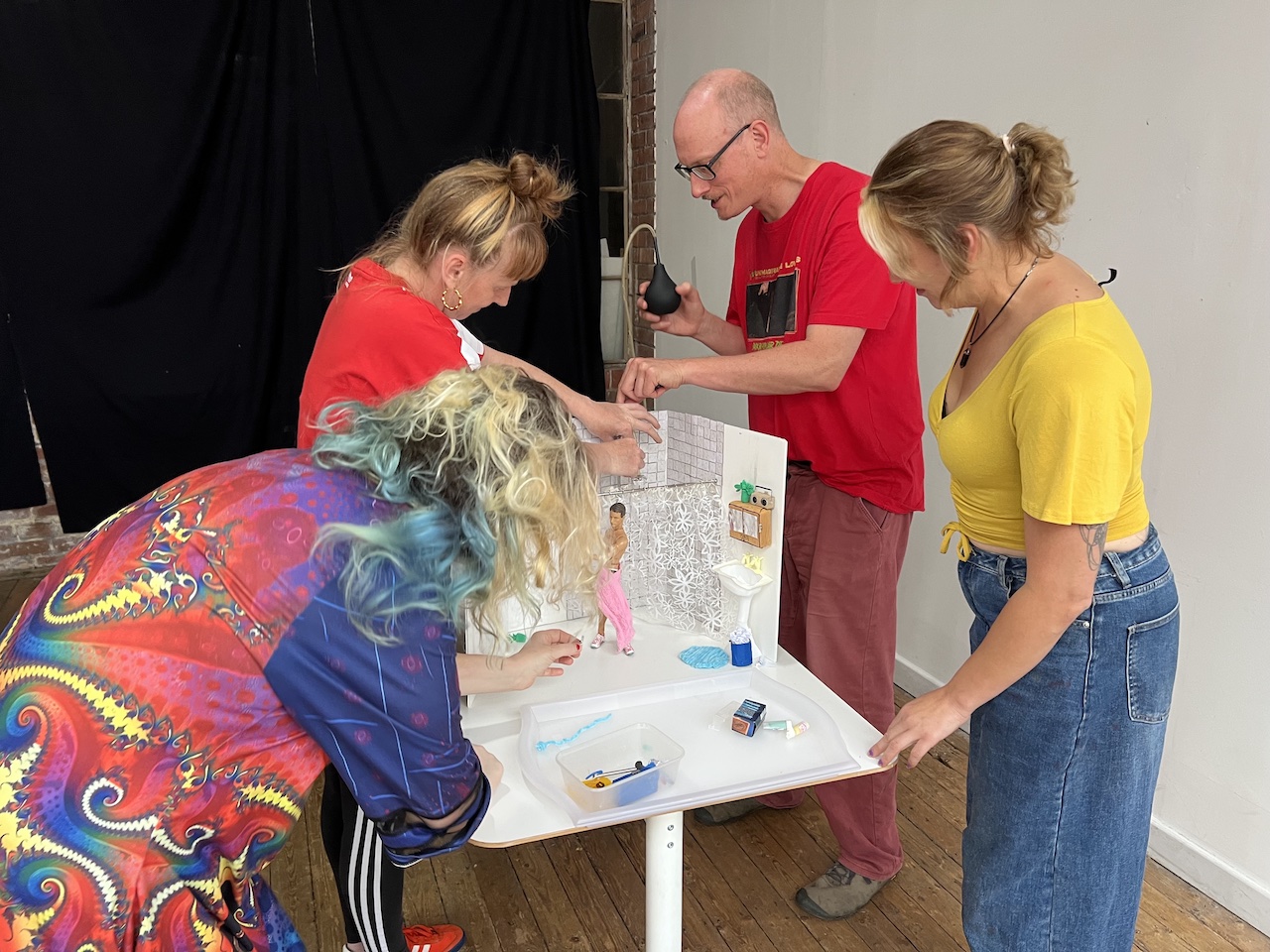
Repair cafe at DoES Liverpool
Why It Matters
Environmental benefits: Repair cafés help extend the life of products, which reduces waste and the need for new resources and manufacturing. For example, in the Farnham case they estimated a significant CO₂ saving.
Skill-sharing & community building: They provide venues for people to share repair knowledge, reducing isolation and building community ties. The movement links technical fix-skills with social connection.
Behaviour change and culture shift: Repair cafés challenge the mindset of “if it’s broken, throw it away, buy new”. They promote “fix it, learn to fix, reuse” instead.
Economic/financial benefits: They help people save money (by repairing rather than replacing) and reduce disposal costs and waste.
What Happens at a Repair Café – Typical Features
Volunteers (often with backgrounds in electronics, sewing, woodwork, mechanical repair) staff stations where visitors bring items. Owners participate, ask questions, learn.
The items repaired vary widely: electrical and electronic goods (radios, lamps, small appliances), clothing/textiles, furniture, jewellery, toys, clocks, etc.
It’s usually free or based on donations; the idea is accessibility for all. Some parts may be charged if needed, but the labour is volunteer.
Workshops are often monthly